Supporting weak branch unions
Steel cables installed high in the canopy limit movement between weak branches or stems, reducing the chance of splitting under strong winds or heavy growth.
Supplementary support systems that help valued trees with weak unions or heavy limbs stay standing, reducing the risk of splits and limb failure.
Cabling and bracing in Hamilton can help save a valuable tree that has weak branch unions, heavy limbs or a split trunk. Instead of removing the tree, our arborists install steel cables or rods high in the canopy, which support the structure and share the load between branches. This reduces the chance of splitting or failure in wind or under heavy growth. Cabling and bracing is often used on mature, historic and much-loved trees, as well as trees close to homes and play areas.
Installation requires skill, as hardware must be placed correctly and checked regularly, so we recommend inspections afterwards. We'll inspect the tree first, explain whether support is a good option and let you know honestly if removal is safer. Contact us for cabling and bracing in Hamilton.
Steel cables installed high in the canopy limit movement between weak branches or stems, reducing the chance of splitting under strong winds or heavy growth.
Where a trunk or large limb has started to split, rods can be installed to hold the structure together, giving the tree a chance to recover and remain in place.
Cabling and bracing can help retain mature, historic or sentimental trees that might otherwise be removed, especially where there are no other practical options for supporting them.
Hardware must be positioned at the right height and angle, and installed correctly, to work properly without harming the tree, so we leave this to experienced climbers.
Cables, rods and attachments need periodic checks as the tree grows, and we recommend inspections to keep the system working and the tree safe.
If support isn't enough to make a tree safe, we'll say so, and talk through other options such as reduction, monitoring or removal.
Cabling and bracing is specialist work, and poor installation can do more harm than good. Our Hamilton arborists inspect your tree first, explain whether support is a sound option and install hardware carefully at the right position. We recommend ongoing inspections and tell you honestly if removal would be the safer choice.
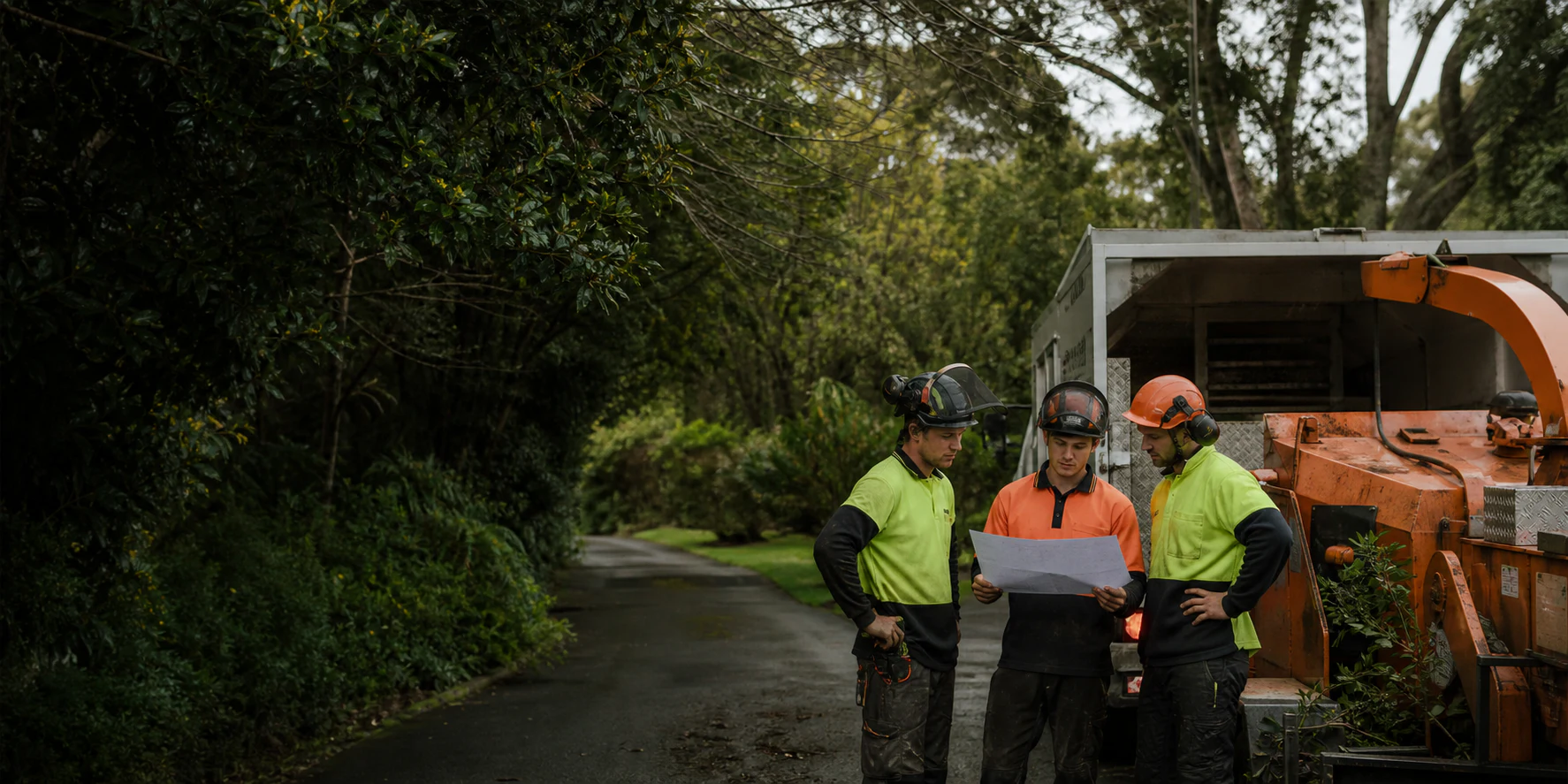
An assessment comes first, but support systems are often considered for:
Co-dominant stems with a narrow or included-bark union
Long, heavy limbs extending over a house, deck or driveway
Trees with a small crack that can be stabilised
Heritage or feature trees where removal is not an option
Trees left more exposed after neighbouring trees were removed
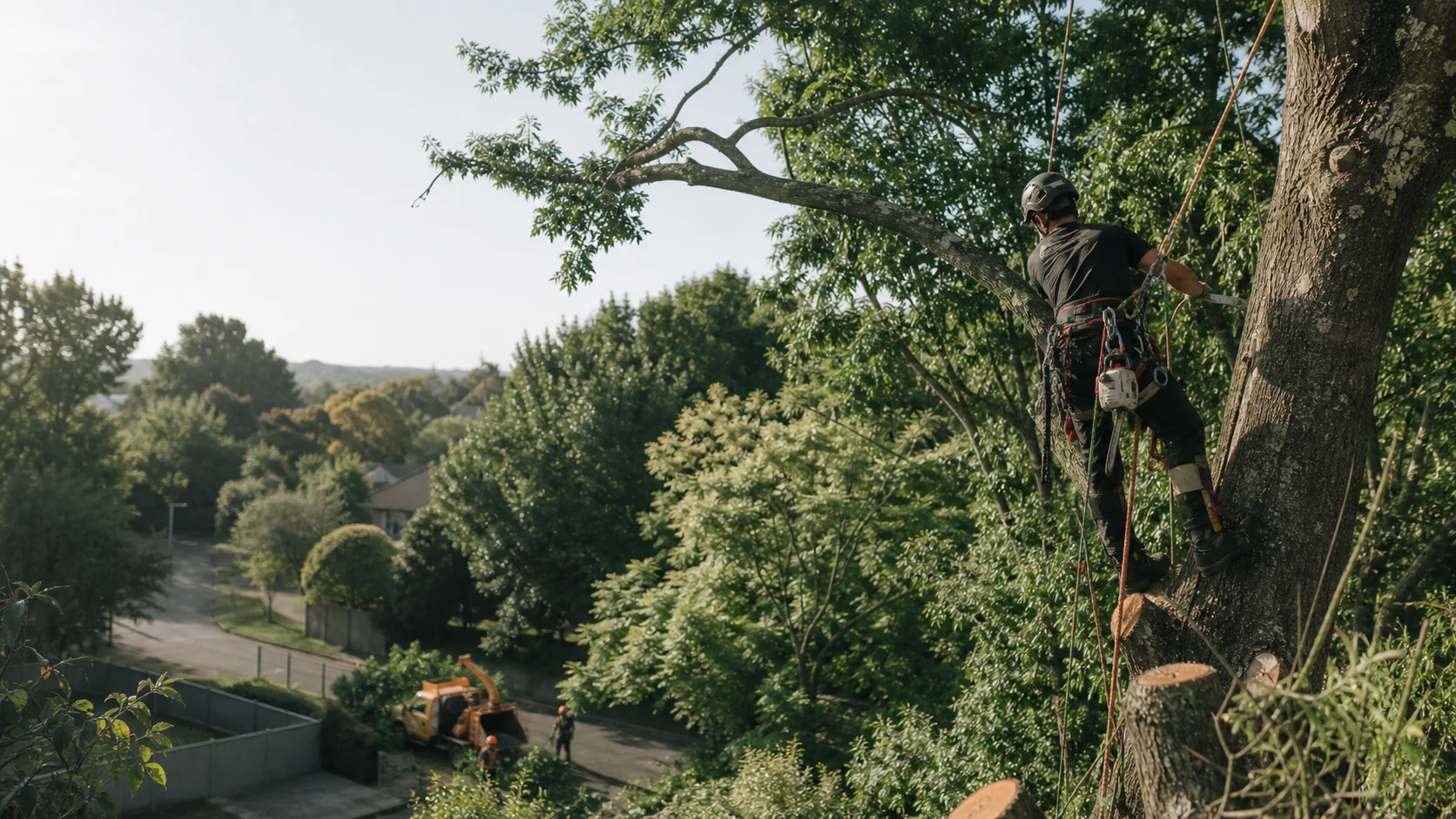
We inspect your tree for weak unions, splits, and heavy limbs to decide whether cabling or bracing can support it safely and extend its useful life.
Our arborists fit steel or dynamic cables and braces at the correct height and tension, supporting the weak points without harming the tree or restricting natural movement.
We explain the ongoing inspections needed so your support system stays effective as the tree grows, and we recommend a suitable schedule for future checks.
Answers to common questions about cabling & bracing in Hamilton. Still have a question? Get in touch.
Cost depends on the number of cables or rods needed, the height and size of the tree, access, the type of system used and whether pruning is done at the same time. Some trees need a single support while others need several. We'll inspect the tree first and provide a free quote that explains what we recommend and why.
There's no fixed lifespan, as it depends on the hardware, the species and how quickly the tree grows. As the canopy develops, cables can need adjusting and hardware may eventually need replacing. That's why regular inspections are important. We'll recommend a checking schedule that suits your tree and the system installed.
Some systems, particularly rods and certain steel hardware, require drilling, which creates small wounds the tree usually seals off over time. Other systems wrap around limbs without drilling. When installed correctly in the right position, the benefit of supporting a weak union usually outweighs the minor injury. We'll explain which type suits your tree.
Dynamic systems use flexible synthetic cables that allow branches to move naturally in the wind while limiting extreme movement, and they're often used as a preventative measure. Static systems use steel cables or rods that restrict movement more firmly and are generally used where a defect such as a crack already exists. The right choice depends on the tree's condition.
Often, yes. Reducing the weight on long or heavy limbs takes some load off the union being supported, so the cables or rods don't have to do all the work. We only prune where it genuinely helps the tree, and doing both in one visit is usually more efficient. We'll explain the combination we recommend after inspecting the tree.
Tell us about your cabling & bracing job and our insured Hamilton arborists will assess the site and give you a clear, no-obligation price. Prefer to talk it through? Call us on 07 808 5077.
Get a Free Estimate