Full tree inspection
We examine the canopy, trunk, branch unions, root zone and soil around your tree, building a clear picture of its overall condition and any problems developing.
A thorough check of your tree's leaves, bark, roots and structure by an experienced arborist, so you know what is wrong and what to do next.
A tree health assessment in Hamilton tells you what's really going on with your trees, before small problems become expensive or dangerous ones. Our qualified arborists inspect the canopy, trunk, branch unions, roots and surrounding soil, looking for signs of disease, decay, pest damage, nutrient stress and structural weakness. We also consider the tree's age, species and growing conditions. You'll get clear, honest feedback on whether the tree is healthy, what's affecting it and what steps, if any, we recommend, from pruning and care to monitoring or removal.
We explain everything in plain language, without the jargon. It's especially useful for mature trees, trees near buildings and trees that look unwell. Early diagnosis can often save a tree. Book a tree health assessment in Hamilton and get practical advice you can act on.
We examine the canopy, trunk, branch unions, root zone and soil around your tree, building a clear picture of its overall condition and any problems developing.
Discoloured leaves, dieback, fungal growth and bark damage can signal serious issues, and we work out what's causing them so you can respond appropriately.
We look for cracks, included bark, decay and heavy lean that could cause limbs or the whole tree to fail, particularly where people or buildings are nearby.
Compacted soil, poor drainage, root damage and nutrient stress can all affect health, and we consider these factors when explaining why a tree is struggling.
You'll receive practical advice on pruning, care, treatment, monitoring or removal, with an honest view of the tree's prospects and what each option involves.
We explain our findings simply, without jargon, so you understand what's happening with your tree and can make confident decisions about its future.
Understanding your tree's health starts with a thorough, qualified inspection. Our Hamilton arborists examine the canopy, trunk, branch unions and roots, looking for disease, pests, decay and structural weakness. We explain what we find in plain language, give honest recommendations and never push work that isn't needed, so you can make confident decisions about your trees.
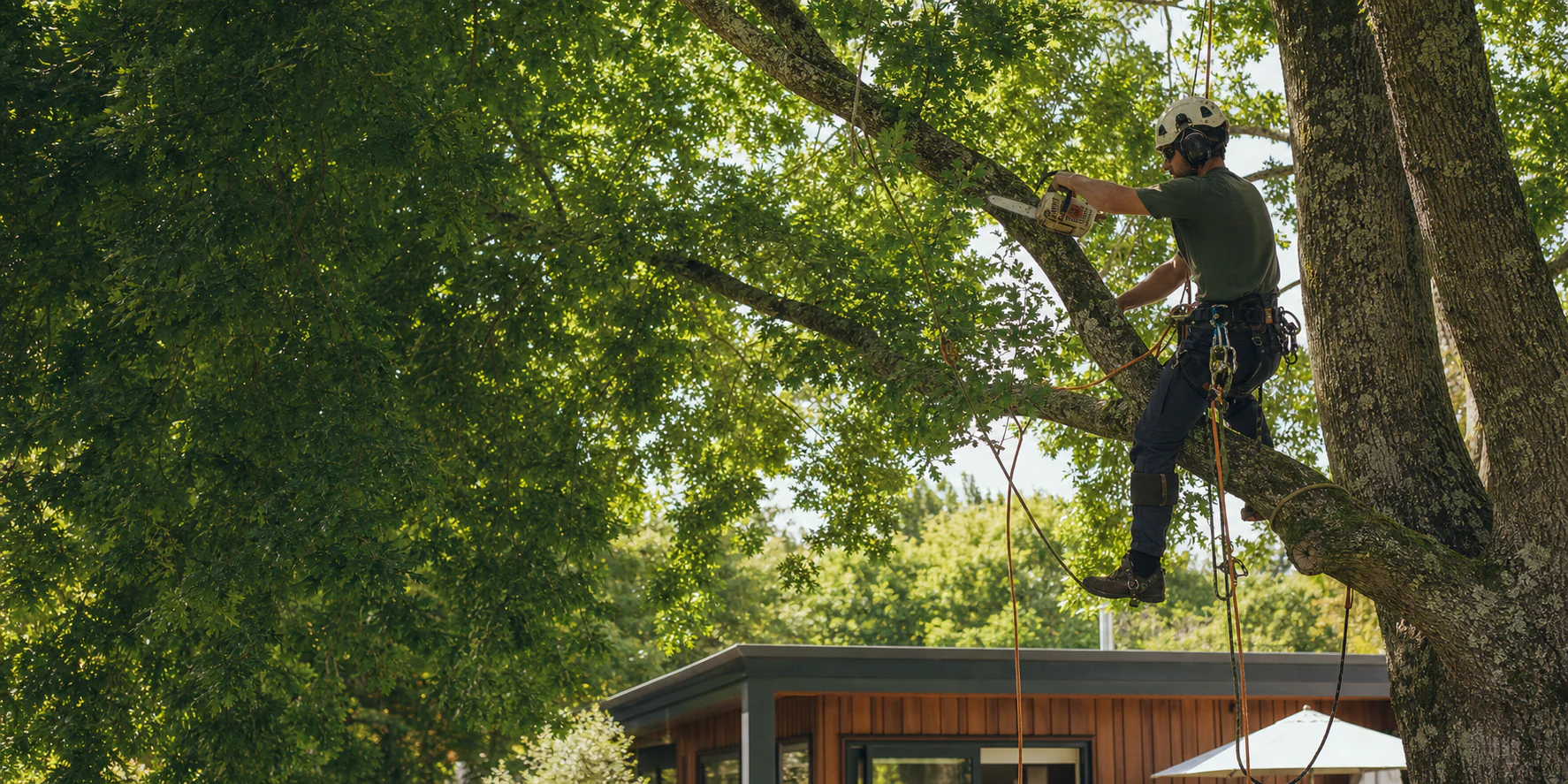
Trees rarely decline overnight. These are the warning signs we most often see around Hamilton properties:
Sparse or yellowing foliage, or leaves dropping well before autumn
Mushrooms, brackets or soft spongy wood at the base or on the trunk
Cracked, peeling or oozing bark, or small exit holes from borer
Dead branches concentrated on one side of the crown
Recent trenching, driveway work or soil level changes near the roots
A new lean, or ground heaving on one side of the trunk
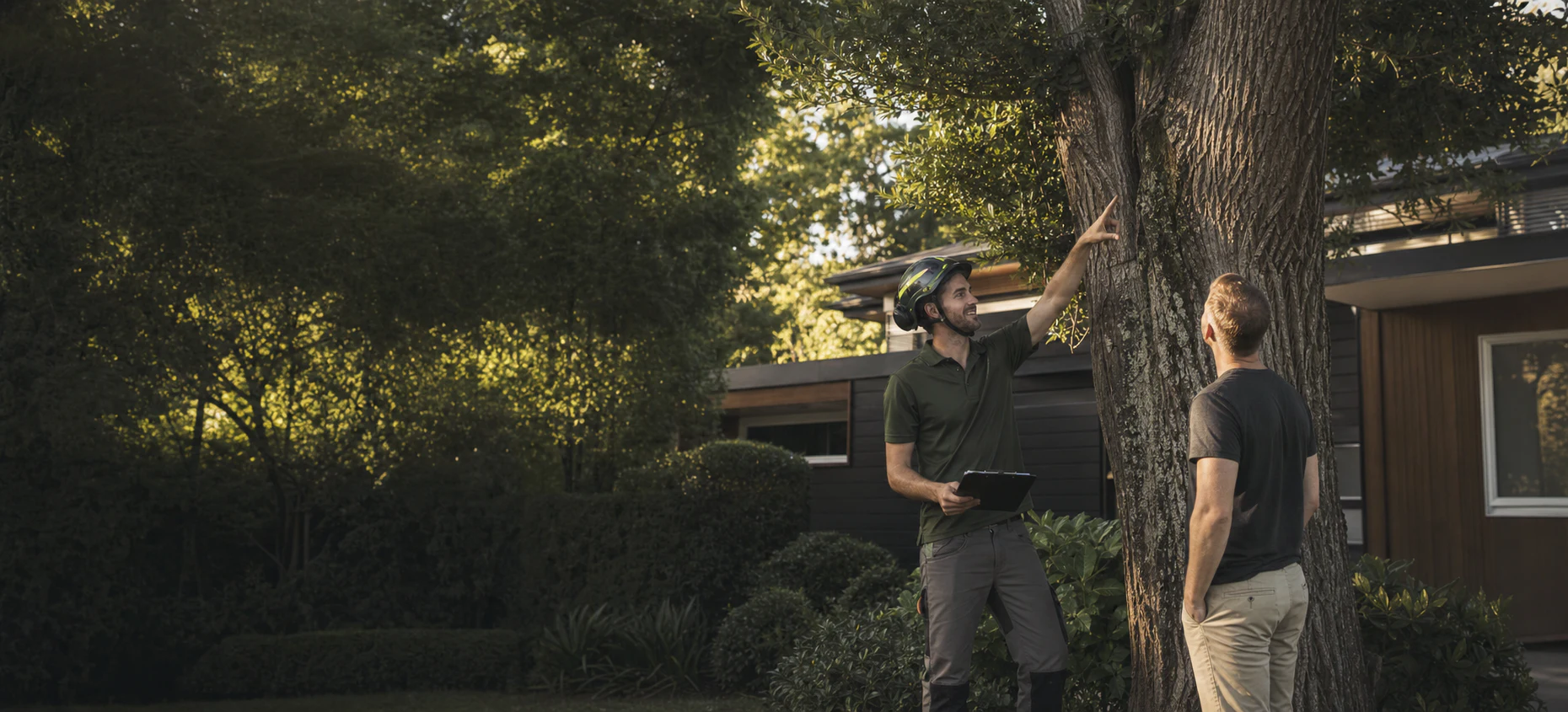
An arborist examines the canopy, trunk, branches, and root zone, checking carefully for decay, disease, pests, and structural weaknesses that may affect the tree's long-term health.
We interpret what we find, identifying stress factors and risks, and explain in plain language what they mean for the tree's health, safety, and future.
You receive clear recommendations, such as pruning, treatment, monitoring, or removal, so you can make a confident, informed decision about how best to care for the tree.
Answers to common questions about tree health assessment in Hamilton. Still have a question? Get in touch.
The cost depends mainly on how many trees you want looked at, their size, how easy they are to reach and whether you need a written summary as well as verbal advice. A single garden tree is usually simpler than a group of large trees on a rural block. Call 07 808 5077 and we'll give you a free quote before we visit.
Most assessments are completed in a single visit, but the time on site depends on the number of trees, their size and how much detail you need. A quick check of one tree is shorter than reviewing a whole property. We'll give you a realistic idea of timing when you book so you can plan around it.
A health assessment focuses on the tree itself, such as disease, pests, decay, nutrient stress and growing conditions, and what can be done to improve its condition. A risk assessment looks at how likely the tree is to fail and what it could hit if it does. The two often overlap, and we can combine them if a tree is both unwell and close to people or buildings.
Spring and summer are useful for deciduous trees because the leaves show signs of stress, dieback and pest activity clearly. Evergreens and structural problems such as fungal growth or cracks can be checked year-round. If you have noticed a change in a tree, there's no need to wait for a particular season, as early diagnosis gives more options.
It isn't always essential if we have clear, safe access to the tree, but it helps if you can be there or share some history beforehand. Knowing when symptoms appeared, whether there has been recent building, trenching or spraying nearby and how the tree has been cared for helps us work out the likely cause.
Tell us about your tree health assessment job and our insured Hamilton arborists will assess the site and give you a clear, no-obligation price. Prefer to talk it through? Call us on 07 808 5077.
Get a Free Estimate