Accurate identification
We inspect leaves, bark, branches and roots to identify likely pests, fungi and diseases, giving you a clearer understanding of what is affecting your tree.
Careful diagnosis and practical management of insect pests, fungal decay and other tree health problems across Hamilton, with treatment options where appropriate.
Pest and disease treatment in Hamilton helps protect your trees from problems that can weaken, disfigure or even kill them. Common signs include discoloured or spotted leaves, dieback, oozing sap, fungal growth, unusual holes in bark and sudden leaf drop. Our arborists inspect affected trees to identify the cause, then recommend a suitable treatment plan, which might include pruning infected parts, improving soil and watering, applying treatments or removing a tree that poses a risk to others.
Early action gives your tree the best chance of recovery and helps stop issues spreading to nearby plants. Never guess at treatment, as the wrong approach can make things worse. We'll explain what we've found in plain language and give you honest advice on the likely outcome. Contact us for pest and disease treatment in Hamilton and keep your trees healthy.
We inspect leaves, bark, branches and roots to identify likely pests, fungi and diseases, giving you a clearer understanding of what is affecting your tree.
Depending on the diagnosis, we may recommend pruning affected parts, adjusting watering, improving soil, applying treatments or taking other steps to support recovery.
Some tree problems spread to nearby plants, and prompt action can limit damage, protecting other trees, hedges and garden areas on your property.
Dieback, leaf spots, sticky residue, oozing sap, unusual holes and fungal growth can all signal trouble, and we help you recognise them early.
If a tree is too far gone or poses a risk to others, we'll explain why removal is the best option and carry it out safely.
We explain our findings plainly, give honest expectations about outcomes and avoid unnecessary treatments, so you only spend money where it's likely to help.
Pest and disease problems are easy to misdiagnose, and the wrong treatment wastes time and money. Our Hamilton arborists inspect your tree carefully, identify the likely cause and recommend a practical plan. We explain everything in plain language, avoid unnecessary treatments and give you honest expectations about how your tree is likely to respond.
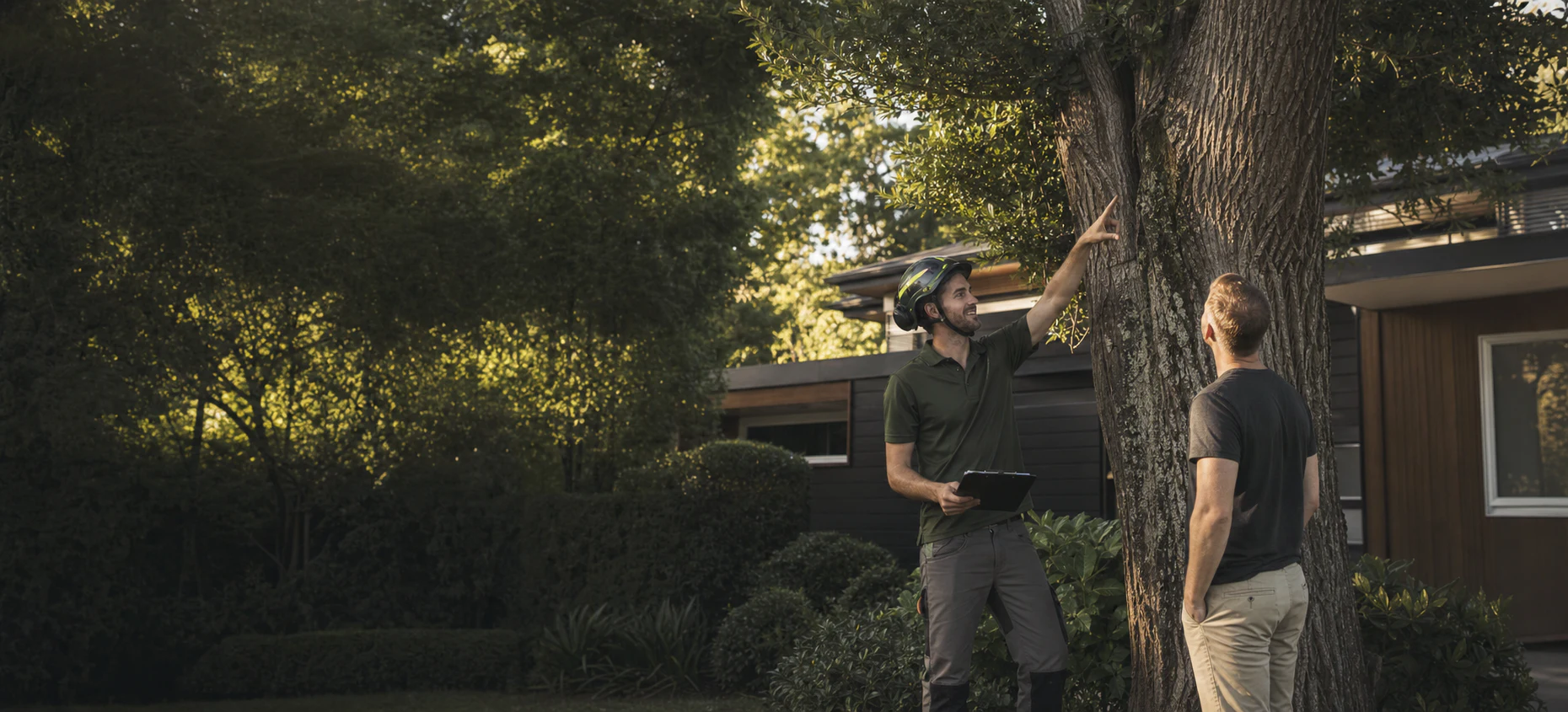
We inspect leaves, bark, and roots for signs of pests and disease, and identify exactly what is affecting your tree before recommending any treatment or further action.
We apply targeted treatments and, where needed, prune affected parts to limit spread and help the tree recover, protecting other trees and plants on your property.
We give you advice on watering, feeding, and ongoing monitoring to keep your tree healthy and resistant, reducing the chance of future outbreaks and costly damage.
Answers to common questions about pest & disease treatment in Hamilton. Still have a question? Get in touch.
We often see borer, scale insects, aphids and leaf-eating caterpillars, along with possum damage on some trees. Fungal problems such as root rot, decay fungi and leaf spots are also common, particularly in damp conditions or where trees are stressed. Accurate identification matters, as different problems need very different responses.
It depends on the type of fungus and how much decay is present. Some fungi feed on dead material and cause little harm, while others indicate root or trunk decay that weakens the tree. A close inspection is needed to judge both health and stability. If decay is significant, we may also recommend a risk assessment.
Trees respond slowly, so improvements often show in the next flush of growth rather than straight away. Some treatments stop pests quickly, but recovery from stress or decline can take a season or more. We'll explain what to expect for your tree and recommend a follow-up check to confirm the treatment is working.
Costs depend on the problem, the size and number of trees, the treatment method and whether follow-up visits are needed. Sometimes the most effective step is pruning or improving growing conditions rather than applying a product. We'll diagnose the issue first and give you a free quote for the options that are likely to help.
Where a product is used, we follow the label directions and tell you about any precautions, such as keeping children and pets away for a period. Some problems can be managed without chemicals at all. Let us know about vegetable gardens, beehives, water tanks or neighbours nearby so we can choose the most suitable approach.
Tell us about your pest & disease treatment job and our insured Hamilton arborists will assess the site and give you a clear, no-obligation price. Prefer to talk it through? Call us on 07 808 5077.
Get a Free Estimate