Palm-specific techniques
Palms have fibrous trunks and heavy crowns that behave differently to other trees, so we use methods designed for them to keep the removal controlled and safe.
Safe, tidy removal of unwanted, damaged or diseased palms across Hamilton, from compact Trachycarpus to towering Canary Island date palms close to homes.
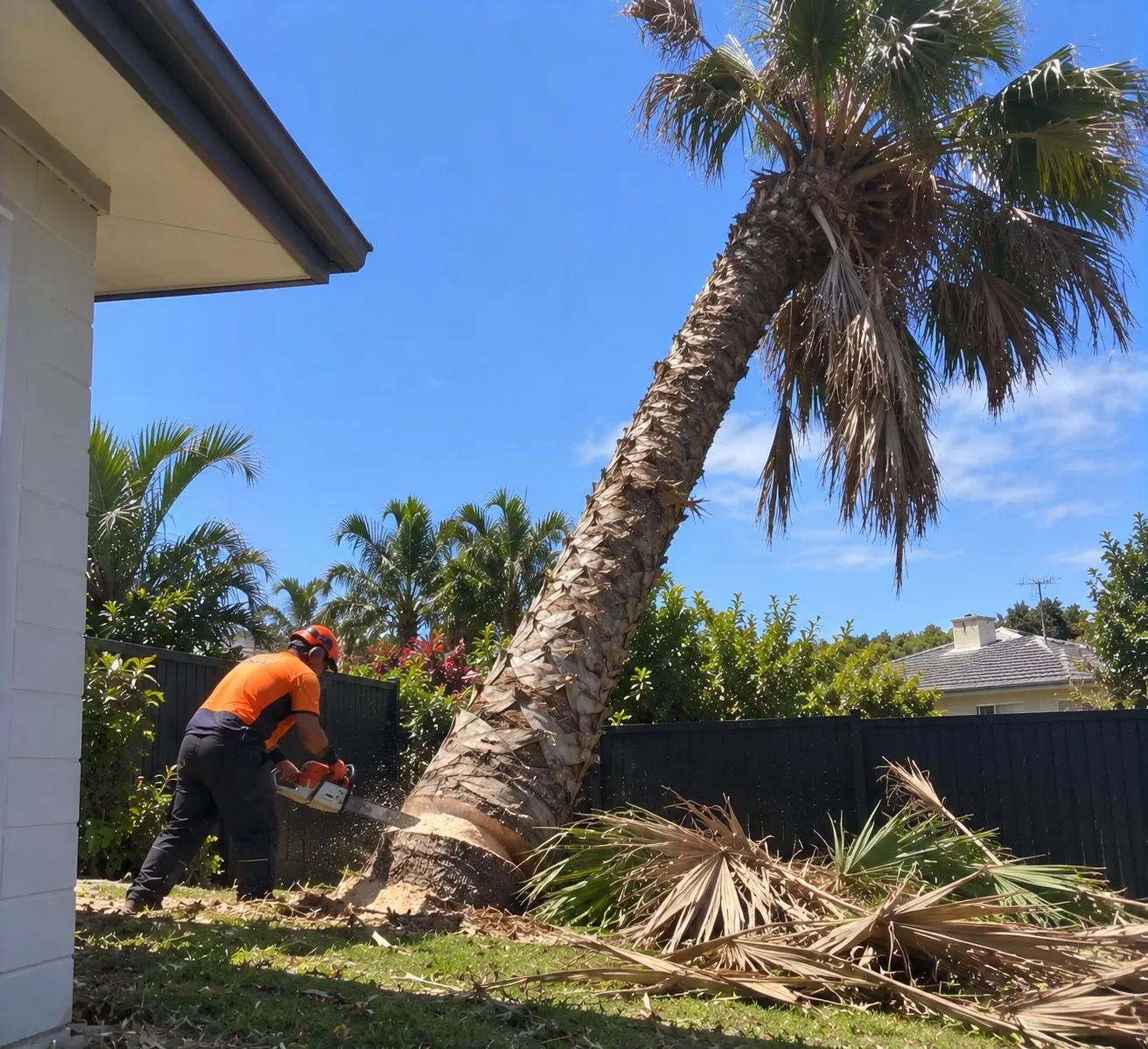
Palm tree removal in Hamilton can be more challenging than it looks. Palms have fibrous trunks, heavy fronds and dense crowns that can be difficult to cut and dangerous to drop. Whether your palm is dying, outgrowing its space, damaged by weather or simply no longer wanted, our arborists remove it safely and cleanly. We assess the height, condition and surroundings, then take the palm down in controlled sections or a careful felling, depending on the site.
Rotting palms need extra care because their trunks can be unstable. We protect your fences, paving and garden beds throughout, and we cart away the fronds and trunk sections once the job is done. If you'd like the stump removed too, just ask. Contact us for palm tree removal in Hamilton and a clear quote.
Palms have fibrous trunks and heavy crowns that behave differently to other trees, so we use methods designed for them to keep the removal controlled and safe.
Palms with soft trunks, bud rot or severe decline can be unstable, and we assess their condition carefully before climbing or cutting to avoid sudden collapse.
Depending on height and space, we either fell the palm in a controlled drop or cut it down in sections, protecting fences, paving, pools and nearby plants.
Heavy fronds, seed clusters and old frond bases are removed first, which makes the trunk easier and safer to handle and reduces mess on your property.
Palm stumps are tough and fibrous, and we can grind them below ground level so you can replant, lay lawn or finish landscaping without leaving anything behind.
Trunk sections, fronds and debris are cleared from site, leaving your property tidy and free of the bulky, awkward waste that palms often produce.
Palms behave differently to other trees, and removing them properly takes the right experience. Our Hamilton specialists understand fibrous trunks, heavy crowns and unstable rotting palms, and we choose safe methods to match. We protect your fences, paving and garden, clear all the bulky waste and give you a clear quote before any work begins.
Not every tired-looking palm needs to come out, but these warning signs are worth getting checked by an arborist:
Fronds wilting and dying on one side of the crown first, a classic early sign of Fusarium wilt in Phoenix palms
A narrowing or pencil-thin trunk near the top, which points to long-term stress and a weakened crown
The palm is leaning, rocking in wind or sitting in a waterlogged, slumped root zone
Spines and falling fronds are a hazard near driveways, play areas or footpaths
Roots or the trunk base are pushing against foundations, retaining walls or drains
The crown has collapsed or the growing point has rotted, meaning the palm cannot recover
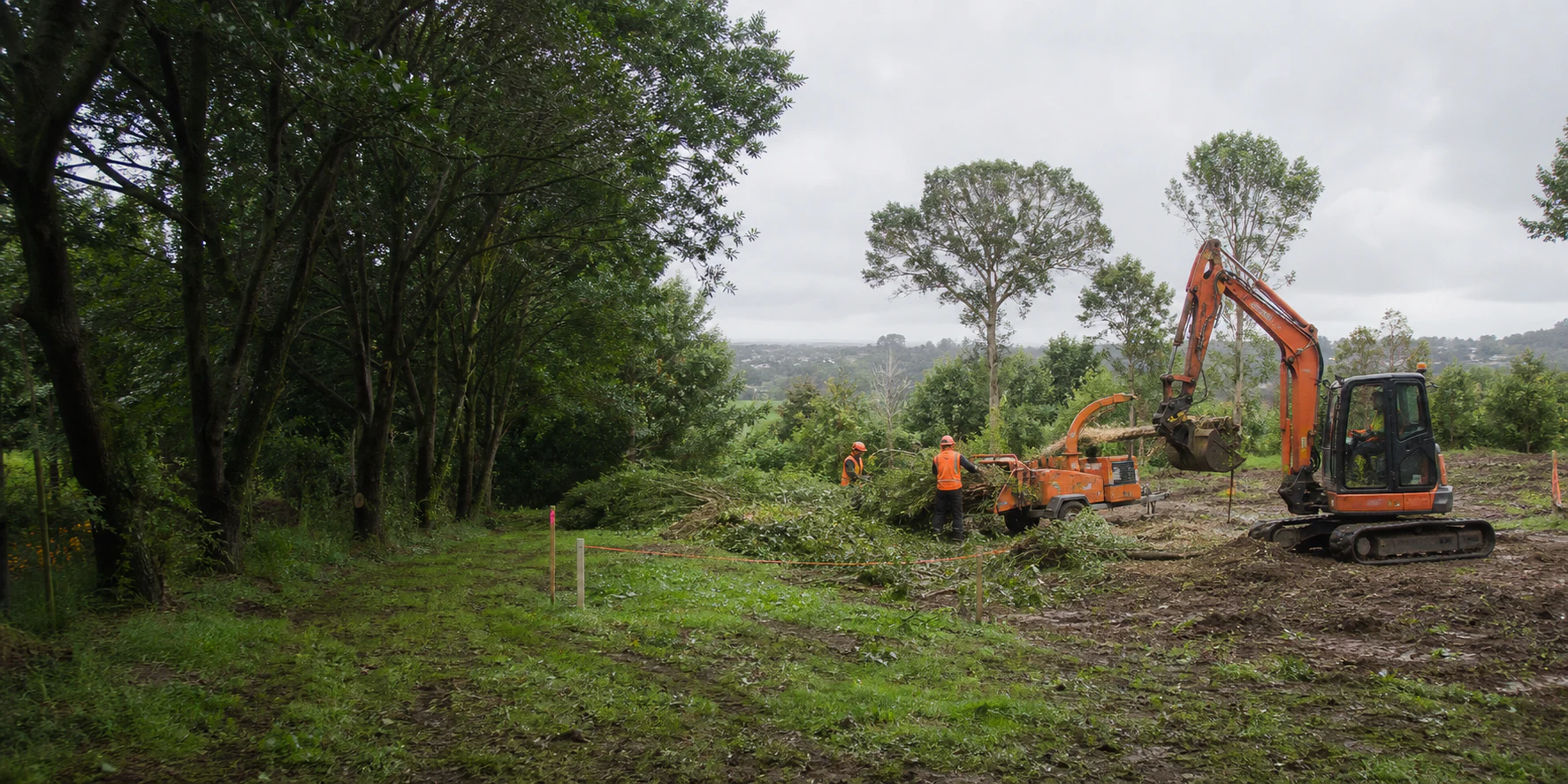
We check the palm's height, trunk condition, and surroundings, and decide whether to fell it whole or dismantle it piece by piece to protect your property.
Palm fronds and trunks are heavy, so we cut and lower them in controlled sections, keeping your roof, pool, fences, and garden fully protected throughout.
We remove fronds, trunk sections, and debris, and can grind the stump so you have a clean, level space ready for your next project.
Answers to common questions about palm tree removal in Hamilton. Still have a question? Get in touch.
The price depends on the palm's height and species, the condition of the trunk, how close it is to the house, fences or power lines, and how easily we can get equipment in. A spiky Canary Island date palm with a heavy crown takes more time and waste handling than a small fan palm. Stump grinding is priced as an option. We give free on-site quotes so you know the cost before any work starts.
Many palms on private property can be removed without consent, but Hamilton City Council's District Plan protects some significant or scheduled trees, and trees in heritage or natural areas may need resource consent. If your palm is large, old or on a property with a heritage listing, check with Hamilton City Council before work begins. We can help you work out whether it is likely to be affected.
Single-trunk palms such as Canary Island date palms and Washingtonia grow from one crown, so once the trunk is cut they will not regrow. Clumping palms that send up suckers from the base are different and can reshoot. For those, grinding out the base or removing new shoots as they appear stops the clump from coming back.
Yes, but if the palm is within reach of overhead lines, the Electricity (Hazards from Trees) Regulations 2003 mean only approved, qualified workers can work close to them. In Hamilton the lines are managed by WEL Networks, which may need to be contacted to arrange a shutdown or have its approved contractors handle the section near the line. We check for lines when we quote and explain the steps involved.
Palms have masses of fine, fibrous roots rather than large woody ones, so once the stump is ground below ground level the area is usually straightforward to replant or turf. Removing most of the grindings and adding fresh topsoil gives new plants a better start. Choose a replacement that suits the space at its mature size, especially near the house or boundary.
Tell us about your palm tree removal job and our insured Hamilton arborists will assess the site and give you a clear, no-obligation price. Prefer to talk it through? Call us on 07 808 5077.
Get a Free Estimate