Selective branch removal
We remove chosen small branches throughout the canopy, thinning it evenly without changing the tree's overall size or shape, which keeps it looking natural and healthy.
Let more light and air through your trees by selectively thinning the canopy, reducing wind load while keeping their size and natural character.
Crown thinning in Hamilton selectively removes small branches from a tree's canopy to reduce density without changing its overall size or shape. Done properly, it lets more light and air pass through the tree, lowers wind resistance and reduces the strain on heavy limbs. It can also help your lawn and garden below, because more sunlight reaches the ground. Our arborists carefully choose which branches to remove, taking out crossing, crowded, weak and dead growth while keeping the tree's natural form.
We never strip too much, because over-thinning can stress a tree. Each tree is different, so we tailor the work to its species and health. Crown thinning suits many broadleaf and fruit trees, and it can improve views and reduce shade. Contact our team for crown thinning in Hamilton and a straightforward quote.
We remove chosen small branches throughout the canopy, thinning it evenly without changing the tree's overall size or shape, which keeps it looking natural and healthy.
A thinner canopy lets more sunlight reach the ground, helping lawns, garden beds and nearby plants grow, and making your outdoor space feel brighter.
Allowing air to flow through the crown reduces humidity and the risk of fungal problems, and helps leaves dry faster after rain.
Thinning lowers the sail effect of dense canopies, which can reduce stress on branches and trunk and make trees more resilient during stormy weather.
Crowded, crossing, dead and rubbing branches are taken out first, which improves structure and reduces the likelihood of damage as the tree continues to grow.
Some species respond poorly to thinning, so we assess each tree first and recommend the right approach, rather than applying one method to everything.
Thinning a crown properly takes judgment, not just a saw. Our Hamilton arborists choose each branch carefully, improving light, airflow and structure without stripping the tree. We tailor the work to each species, avoid over-thinning and give you clear, honest advice, so your tree is healthier, safer and better looking after every visit.
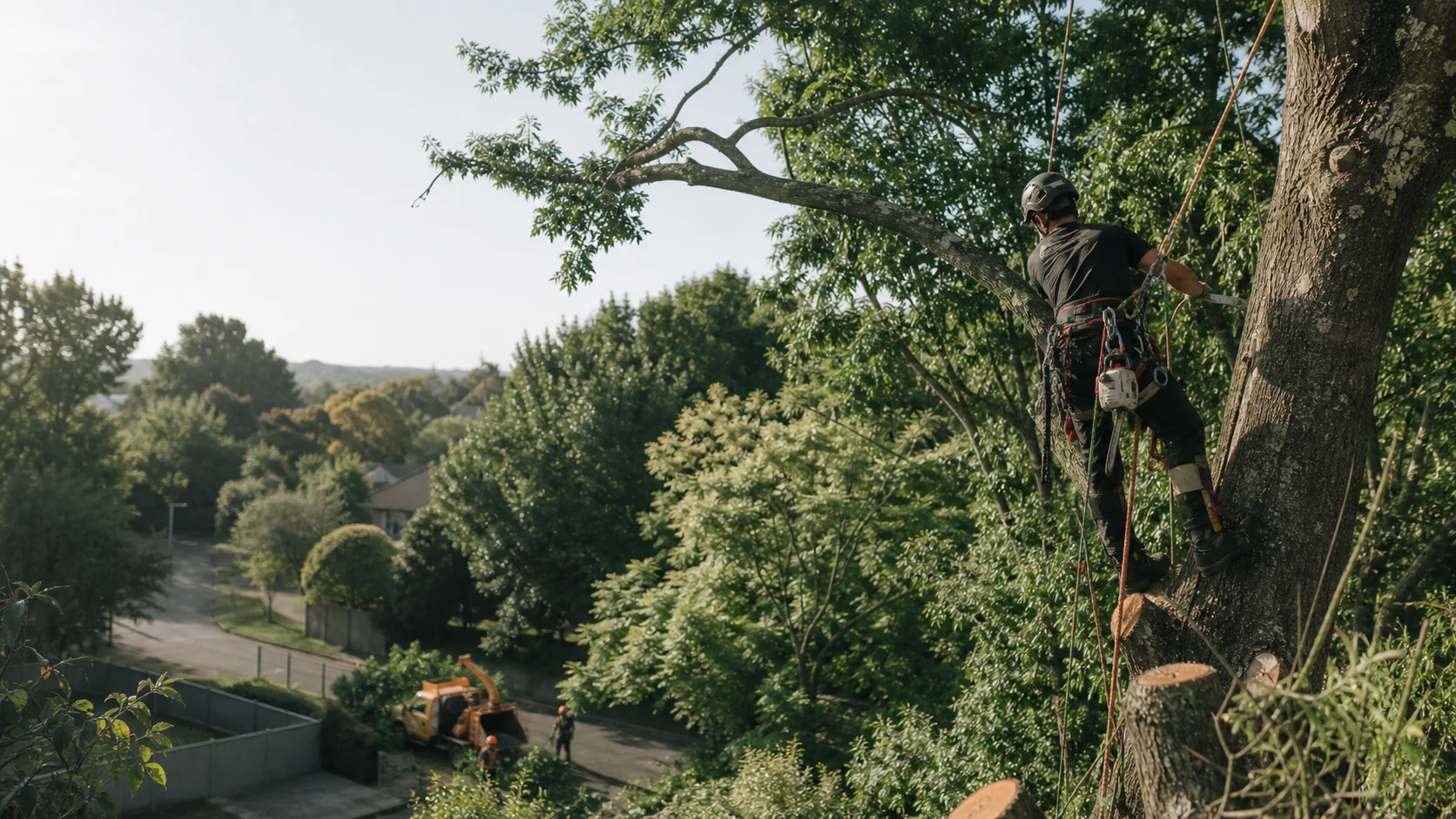
We assess how dense the crown is and which crossing, crowded, or weak branches should come out to improve airflow, light penetration, and overall tree health.
We remove chosen branches evenly through the canopy without changing the overall shape, reducing weight and wind resistance while keeping the tree looking full and natural.
All branches and leaf matter are cleared away, and we explain how the thinning supports tree health, safety, and stronger growth in the seasons ahead.
Answers to common questions about crown thinning in Hamilton. Still have a question? Get in touch.
Crown thinning prices depend on the size and species of the tree, how dense the canopy is, how much access we have and whether branches need to be roped down over roofs or gardens. The volume of green waste also affects the cost. We look at the tree first and give a free quote that explains how much we plan to remove.
Usually only a modest proportion of the live foliage, spread evenly through the crown. Good thinning keeps plenty of foliage along the inner parts of the branches rather than stripping them bare and leaving tufts at the ends, a practice known as lion-tailing that can weaken limbs. The exact amount depends on the tree and its health.
Crown thinning lowers the density of the canopy but keeps the tree at much the same height and spread. Crown reduction makes the tree smaller overall. If your main concern is light, airflow or wind resistance, thinning may be enough, but if the tree has simply outgrown its space, reduction is often the better fit. We can advise once we see the tree.
Most trees only need thinning every few years, although fast-growing species may need it more often to keep the canopy open. Thinning too frequently can encourage lots of new shoots and undo the benefit. We will suggest a sensible interval based on the species, its growth rate and what you want to achieve.
For many deciduous trees, late winter is a good time because the branch structure is easy to see. Evergreen trees can often be thinned at other times of year, but it is best to avoid heavy work during hot, dry spells when trees are already under stress. We will recommend the right timing for your particular tree.
Tell us about your crown thinning job and our insured Hamilton arborists will assess the site and give you a clear, no-obligation price. Prefer to talk it through? Call us on 07 808 5077.
Get a Free Estimate